| |
Utagawa SADAHIDE
|
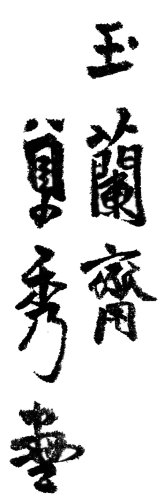 |
| "Gyokuransai SADAHIDE Ga" (玉蘭斎 貞秀 画) |
Artist – At the age of 14, SADAHIDE
(貞秀) became pupil of KUNISADA
(TOYOKUNI-III), His first work was said to be the cover of the
final page of "Ebisu and Daikoku" written by by
Higashisato Sanjin, published in 1826. Several book project
illustrations followed. He must have been very successful in his
early years, because he had been inscribed as the ranked number
four of eleven named disciples in the record stele of the
TOYOKUNI Sensei's Calligraphy Monument in the grounds of the
Myoken-do temple in Honjo Yanagashima, aged only 22 years old.
In the early Tenpo era (1830-1844), he produced more works of portraits of beautiful women and theatrical scenes , and also worked on fan paintings , warrior paintings, landscapes, and original paintings, as well as novels and illustrated picture books. He also illustrated the thirteen volumes of "Keisei Suikoden" published in 1835, along with Kunisada and Kuniyasu.
From the latter half of the Tenpo era, he began to create works using a bird's-eye view composition, such as "Eight Views of Japan" and "Ten Views of Edo". In the popularity ranking of 1849, Utagawa Kuniyoshi, Utagawa Hiroshige, Torii Kiyomitsu II, Yanagawa Shigenobu II, and Sadahide were all ranked in the top division, and later, when his works appeared at the Paris World's Fair in 1867, he was listed as the representative of the ukiyo-e artists along with Utagawa Yoshimune.
During the late Edo period, he produced portraits of beautiful women and actors, as well as numerous Yokohama-e and Meiji-e ("Portraits of Modern Japan") during the Ansei and Bunkyu eras. In the "Tokyo Saisei-ki" a ranking of painters published in 1868 (Meiji 1), Sadahide was ranked first.
Sadahide produced over 100 Yokohama prints, ranking third in number after Utagawa Yoshitora and Utagawa Yoshikazu, but his meticulous depictions and compositional skills are highly regarded. His representative works include "Great Map of Yokohama, the Open Port" from 1859, the illustrated book "Record of Observations on the Opening of Yokohama Port", and "Illustrated Compendium of All Things" from 1862. In his later years, in 1873, he created copperplate engravings for the famous "Ten Poems for Elementary School Students". In 1875, he illustrated " A Journey Through the Civilization and Enlightenment", but nothing is known about him after that.
Personal life - SADAHIDE was born HASHIMOTO Kenjiro (橋本 兼次郎) with his childhood name Kane (兼). He was from Fusa, Shimosa province, present day Abiko City, Chiba prefecture. His family lived in front of Kameido Tenjin Shrine in Honjo Kameido village. From Ansei era to Bunkyo era he lived in Yokohama in front of the Okuramae.
Aliases - SADAHIDE initially used Gountei (五雲亭) as his artist's epithet (ga), Gyokuransai 玉蘭斎, or Gyokuō 玉翁. Later used Tamaran (玉蘭 /Gyokuran), Tamaransai (玉蘭斎), Tamarashujin (玉蘭主人), Ichigyokusai (一玉斎), Tamao (玉翁), and others. As pen name (go) he initially used Utagawa SADAHIDE (歌川 貞秀), later Hashimoto SADAHIDE (橋本 貞秀).
Disciples - Little is known about his disciples. Only Utagawa Hideki (歌川秀輝) was considered one of his students
In the early Tenpo era (1830-1844), he produced more works of portraits of beautiful women and theatrical scenes , and also worked on fan paintings , warrior paintings, landscapes, and original paintings, as well as novels and illustrated picture books. He also illustrated the thirteen volumes of "Keisei Suikoden" published in 1835, along with Kunisada and Kuniyasu.
From the latter half of the Tenpo era, he began to create works using a bird's-eye view composition, such as "Eight Views of Japan" and "Ten Views of Edo". In the popularity ranking of 1849, Utagawa Kuniyoshi, Utagawa Hiroshige, Torii Kiyomitsu II, Yanagawa Shigenobu II, and Sadahide were all ranked in the top division, and later, when his works appeared at the Paris World's Fair in 1867, he was listed as the representative of the ukiyo-e artists along with Utagawa Yoshimune.
During the late Edo period, he produced portraits of beautiful women and actors, as well as numerous Yokohama-e and Meiji-e ("Portraits of Modern Japan") during the Ansei and Bunkyu eras. In the "Tokyo Saisei-ki" a ranking of painters published in 1868 (Meiji 1), Sadahide was ranked first.
Sadahide produced over 100 Yokohama prints, ranking third in number after Utagawa Yoshitora and Utagawa Yoshikazu, but his meticulous depictions and compositional skills are highly regarded. His representative works include "Great Map of Yokohama, the Open Port" from 1859, the illustrated book "Record of Observations on the Opening of Yokohama Port", and "Illustrated Compendium of All Things" from 1862. In his later years, in 1873, he created copperplate engravings for the famous "Ten Poems for Elementary School Students". In 1875, he illustrated " A Journey Through the Civilization and Enlightenment", but nothing is known about him after that.
Personal life - SADAHIDE was born HASHIMOTO Kenjiro (橋本 兼次郎) with his childhood name Kane (兼). He was from Fusa, Shimosa province, present day Abiko City, Chiba prefecture. His family lived in front of Kameido Tenjin Shrine in Honjo Kameido village. From Ansei era to Bunkyo era he lived in Yokohama in front of the Okuramae.
Aliases - SADAHIDE initially used Gountei (五雲亭) as his artist's epithet (ga), Gyokuransai 玉蘭斎, or Gyokuō 玉翁. Later used Tamaran (玉蘭 /Gyokuran), Tamaransai (玉蘭斎), Tamarashujin (玉蘭主人), Ichigyokusai (一玉斎), Tamao (玉翁), and others. As pen name (go) he initially used Utagawa SADAHIDE (歌川 貞秀), later Hashimoto SADAHIDE (橋本 貞秀).
Disciples - Little is known about his disciples. Only Utagawa Hideki (歌川秀輝) was considered one of his students
Copyright 2008 ff: Hans P. Boehme